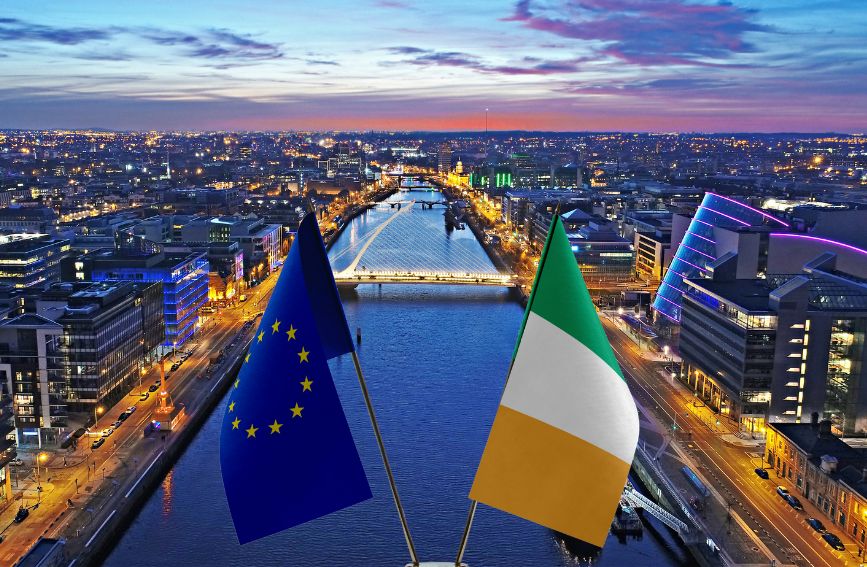
On 1 July 2026, Ireland assumed the Presidency of the Council of the European Union, a role that rotates among member states every six months and places a small country of five million people at the centre of European legislative business. It is a moment that generates considerable political ceremony, a wave of ministerial travel, and, for most Irish people, genuine confusion about what the Presidency actually involves and why it matters.
This article explains the mechanics of the role, the priorities Ireland has set for its term, and the tangible ways in which the Presidency and the legislation it steers, will affect ordinary life in Ireland and across the bloc.
What the Council of the EU Actually Is
The European Union has several bodies that are easy to confuse. The Council of the EU, sometimes called the Council of Ministers is distinct from the European Council (which brings together heads of state and sets broad strategic direction) and entirely separate from the Council of Europe (a wider, non-EU human rights body based in Strasbourg).
The Council of the EU is where ministers from all 27 member states meet to negotiate and adopt EU legislation. Depending on the subject, agriculture, finance, justice, transport, the relevant ministers attend. When the Irish Minister for Finance travels to Brussels for an ECOFIN meeting, they are representing Ireland at the Council. When the Minister for Housing attends an informal urban affairs meeting, the same applies.
Legislation in the EU typically passes through two parallel tracks: the European Parliament and the Council. Both must agree on the final text of most laws before they come into force. This negotiation process called the ordinary legislative procedure, or co-decision is where most EU law is actually shaped.
What the Rotating Presidency Does
The country holding the Presidency does not gain any new lawmaking power. Ireland cannot impose Irish priorities on 26 other member states. What the Presidency provides is the chairmanship of Council meetings, the power to set agendas, run negotiations, and represent the Council’s position in talks with the European Parliament.
This is sometimes described as the role of an honest broker: the Presidency country is expected to set aside its own national interests and manage the negotiation process in the interest of reaching agreement. In practice, this is imperfect, no government entirely sheds its national perspective but the role does carry a genuine obligation of impartiality that is taken seriously.
The Presidency also determines which files receive political priority. With hundreds of pieces of legislation in various stages of negotiation at any one time, the incoming Presidency must decide which dossiers it will push to conclusion during its six months and which it will leave to the next holder in Ireland’s case, the Czech Republic, which takes over on 1 January 2027.
The Presidency cannot make laws alone but it decides which laws get made first. That sequencing power is real and consequential.
Ireland’s Stated Priorities for Its 2026 Presidency
The Government published its Presidency programme in early 2026, organising its agenda around four broad themes: competitive and sustainable growth, security and the rule of law, social Europe, and Ireland’s role in the world. Within those headings, several specific files have been identified as priority dossiers.
Competitiveness legislation remains near the top of the agenda, reflecting the EU’s broader anxiety about falling behind the United States and China in technology and manufacturing. The European Competitiveness Compass, a strategic framework published by the European Commission following Mario Draghi’s landmark 2024 report, sets out investment and regulatory reform targets that the Irish Presidency has committed to advancing in Council negotiations.
Defence and security have taken on a new urgency in the post-2022 European context. Ireland’s traditional military neutrality makes this a diplomatically sensitive area: the Irish Presidency must chair discussions on EU defence cooperation and the rearmament frameworks being developed across the bloc, even as the Government insists that Irish neutrality is not under threat. The distinction between EU defence industrial policy where Ireland participates and mutual defence obligations where it does not will be tested repeatedly during the term.
Housing and cost-of-living pressures, issues that have dominated domestic Irish politics, are being folded into the social Europe strand of the Presidency agenda. The European Affordable Housing Initiative and related directives on energy poverty will be among the files Ireland chairs during its term.
The Practical Workload
The Presidency is not a ceremonial role. For six months, Irish civil servants primarily from the Department of Foreign Affairs, the Permanent Representation in Brussels and sectoral departments will take the lead on the chairing of thousands of meetings. Council working party meetings alone number in the hundreds during a typical Presidency. Ministers fly to Brussels for formal Council sessions. The Taoiseach attends European Council summits that typically occur twice during the term.
Ireland is also responsible for hosting a series of informal ministerial meetings, often called Gymnich meetings in the case of foreign affairs and a European Council summit under Irish chairmanship may occur, depending on the political calendar.
The cost of holding the Presidency is significant. Ireland’s 2013 Presidency cost the state almost €60 million. The 2026 term is expected to cost significantly somewhat more. This is accounting for inflation and the expanded EU security agenda that would require additional logistical arrangements.
What Previous Irish Presidencies Delivered
Ireland has held the EU Council Presidency six times: in 1975, 1979, 1984, 1990, 1996 and 2013. The 2013 Presidency is the most recent and the most relevant comparator.
That term, which ran under the Fine Gael–Labour coalition government, was dominated by the fallout of the financial crisis and Ireland’s ongoing bailout programme. Despite those constraints, the 2013 Presidency concluded significant legislative agreements including the banking union framework, a set of reforms that remain central to how the eurozone manages financial stability today. It also finalised the Common Agricultural Policy reform of that cycle, a file of direct importance to Irish farmers.
The 1990 Presidency was particularly consequential. This is when Ireland chaired the Council during the period when German reunification required emergency European-level coordination and the Intergovernmental Conference that produced the Maastricht Treaty was opened under Irish chairmanship.
What It Means for Ireland as a Country
For citizens, the Presidency’s most tangible short-term effect is one of visibility. Ireland’s profile in European capitals rises. Senior European Commission officials travel to Dublin. Ministerial positions on EU legislation receive more media coverage than usual. Journalists who normally cover national politics turn their attention to Brussels.
The longer-term significance is different and harder to measure. Holding the Presidency allows Irish officials to build relationships with counterparts across 26 member states that persist after the term ends. The civil servants who run the working party chairs become more experienced negotiators. The Permanent Representation in Brussels, Ireland’s operational hub in the EU and expands significantly during the term, with secondees from domestic departments, and many of those staff return to their home departments with an EU literacy that benefits Irish policymaking for years.
There is also a question of legacy. Every Presidency wants to point to deals closed, directives agreed, and crises managed. Whether Ireland’s 2026 term delivers on its stated priorities will depend heavily on factors outside its control, the pace of Commission proposals, the positions of large member states like Germany and France, and the political atmosphere in the European Parliament, which following its 2024 elections has a more fragmented and at times contentious dynamic.
A Note on What the Presidency Cannot Do
It is worth being clear about the limits of the role, because media coverage of Presidencies tends to overstate national influence. Ireland cannot unilaterally change EU policy on any subject. It cannot prevent a majority of member states from agreeing something it opposes, qualified majority voting means large coalitions can override individual objectors on most issues. It cannot direct the European Commission, which retains the sole right to propose legislation.
The Presidency chair can slow negotiations, structure discussions, and shape the sequence of compromises but the outcomes ultimately depend on the 27 member states and the European Parliament reaching agreement. Ireland’s leverage is real but subtle: it is the leverage of the meeting chair, not the lawmaker.
That said, a well-run Presidency that closes important dossiers, manages crises competently and advances an agenda that other member states find credible is a genuine achievement. Ireland’s 2013 Presidency is widely regarded in Brussels as having done precisely that under extraordinarily difficult domestic circumstances. The 2026 Presidency will be judged by the same standard.
How to Follow the Presidency
Citizens who want to track what Ireland is doing during its Presidency can follow coverage on The Irish Wire, check the Council of the EU website for agendas and outcomes of ministerial meetings, and monitor the Department of Foreign Affairs Presidency microsite which publishes progress updates. The European Parliament’s legislative observatory tracks the progress of individual legislative files in real time.
The Presidency runs from 1 July to 31 December 2026. Its success or failure will only be fully apparent when the final legislative scorecards are drawn up in January 2027. But the six months ahead will be among the most consequential in Irish European engagement since the 2013 term and, for anyone who wants to understand how EU law is actually made, they offer a valuable window into a process that shapes daily life in ways that rarely receive the attention they deserve.